How I Crushed Debt While Growing My Wealth — A Real Strategy
Paying off debt while building wealth used to feel impossible — like trying to fill a bucket with a hole in it. I was stuck in the cycle: every dollar went to payments, nothing was left to invest. Then I flipped the script. Instead of choosing between debt freedom and asset growth, I learned how to do both. This isn’t a get-rich-quick scheme — it’s a real, tested path that changed my financial life. It required discipline, clarity, and a shift in mindset. But more than anything, it proved that you don’t have to wait until your debts are gone to start building a secure future. With the right strategy, you can eliminate what you owe and grow what you own — at the same time.
The Debt Trap: Why Most People Stay Stuck
For many, the idea of tackling debt begins with an all-in approach: cut back on everything, throw every spare dollar at credit cards or loans, and don’t stop until the balance hits zero. While this method has merit, it often comes at a high cost — the cost of missed opportunity. The problem isn’t the discipline; it’s the narrow focus. When people treat debt repayment as the only financial goal, they unknowingly delay the growth phase of their financial journey. They believe wealth building must wait, but in reality, time lost in investing is rarely recovered.
This narrow focus creates a psychological trap. The constant pressure to pay down debt can feel overwhelming, especially when progress seems slow. Minimum payments barely dent large balances, and interest keeps accumulating. Over time, motivation fades. Even those who are consistent often find themselves exhausted, having sacrificed too much for too long without seeing a broader payoff. They may pay off a credit card, only to face a car loan, medical bill, or emergency expense shortly after. Without a financial cushion or long-term assets, they remain vulnerable — one unexpected cost away from falling back into debt.
Another overlooked risk is the delay in compounding. Let’s say someone spends five years paying off $30,000 in debt but puts nothing into retirement during that time. If they had instead invested $150 a month in a low-cost index fund averaging 7% annual returns, they would have gained over $10,000 in value — money that would continue to grow for decades. By postponing investing, they give up not just the initial contributions but the decades of growth those contributions could generate. The result? They reach debt freedom later than expected and start building wealth much later than necessary.
The truth is, debt and financial progress don’t have to be enemies. The goal should not be to eliminate debt at all costs, but to achieve lasting financial health. That means balancing repayment with forward-looking decisions. When people treat debt as the sole priority, they often ignore the bigger picture: long-term stability, emergency preparedness, and asset accumulation. A more effective strategy recognizes that financial wellness is not just about numbers on a statement — it’s about habits, resilience, and vision.
Rethinking the Rules: Debt and Assets Can Coexist
For years, the common advice was simple: pay off all debt before investing. But that rule, while well-intentioned, doesn’t account for the power of time and compounding. The reality is that you don’t have to wait until your last bill is paid to begin building wealth. In fact, doing both — paying down debt and growing assets — can be not only possible but smarter in the long run. This shift in thinking is crucial: financial health isn’t defined by a single zero balance, but by a balanced, sustainable relationship with money.
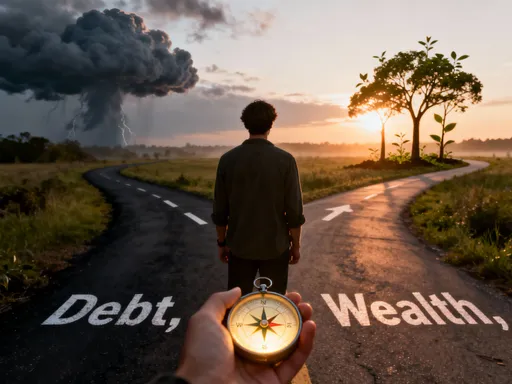
Imagine you’re clearing a forest to build a home. You focus on removing trees, roots, and debris — that’s your debt. But while you work, you also plant a few saplings on the edge of the land. Those young trees won’t provide shade today, but in ten or twenty years, they’ll be strong and valuable. That’s what strategic investing during debt repayment looks like. You’re clearing the obstacles while also laying the foundation for future growth. The key is not to plant too many trees at once — just enough to matter over time.
This dual approach works because not all debt is the same, and not all investments are high-risk. High-interest debt, like credit card balances, should be prioritized because the interest erodes wealth quickly. But low-interest debt, such as a fixed-rate mortgage or student loan, often carries rates below long-term market returns. In those cases, aggressively paying off the debt may mean missing out on higher potential gains from investing. For example, if your student loan charges 4% interest, but the stock market averages 7% over time, you’re mathematically ahead by investing the difference — as long as you can manage the payments reliably.
Moreover, maintaining small investments builds financial discipline and confidence. When you see your portfolio grow, even slowly, it reinforces positive behavior. It reminds you that you’re not just surviving — you’re moving forward. This psychological boost can be just as important as the financial one. It shifts your identity from “someone in debt” to “someone building a future.” And that mindset change is often what keeps people consistent, even when progress feels slow.
The Dual-Track Method: Balance Payments and Growth
The dual-track method is a structured way to manage both debt repayment and wealth building without overextending your budget. It’s not about doing everything at once, but about making intentional choices with your income. The goal is to eliminate high-interest debt as quickly as possible while still contributing enough to long-term assets to benefit from compounding. This approach requires planning, but it’s designed to be realistic for people with moderate incomes and real-life expenses.
Here’s how it works: start by listing all your debts, ordered by interest rate from highest to lowest. Focus your extra payments on the highest-interest debt first — this is the avalanche method, which saves the most money on interest over time. At the same time, commit a small but consistent amount to a low-cost investment vehicle, such as a retirement account. Even $50 or $100 per month can make a meaningful difference when invested early and held for decades. The key is consistency, not size.
For example, someone with $25,000 in student loans at 5% interest and $8,000 in credit card debt at 19% should prioritize the credit card. They might allocate $400 a month to pay it down aggressively while still contributing $75 to a Roth IRA. Once the credit card is paid off, they redirect that $400 toward the student loan, increasing their repayment power. Meanwhile, the $75 monthly investment continues to grow tax-free over time. This way, they gain both short-term debt relief and long-term financial momentum.
Another benefit of the dual-track method is flexibility. Life changes — incomes rise, expenses shift, emergencies happen. By maintaining both debt repayment and investing, you avoid the “all or nothing” mindset that leads to burnout. If you need to pause investments temporarily during a tight month, you can — but you’re more likely to resume because the habit is already in place. And because you’re not waiting years to start investing, you preserve the most valuable asset in personal finance: time.
Choosing the Right Assets: Simplicity Over Speculation
When you’re working to pay off debt, the last thing you want is to take on new financial risks. That’s why the types of assets you choose during this phase matter immensely. The goal isn’t to get rich quickly — it’s to build stability and grow wealth slowly, safely, and consistently. That means avoiding speculative investments like individual stocks, cryptocurrencies, or high-risk startups. Instead, focus on simple, diversified, and low-cost options that align with long-term growth and minimal volatility.
One of the best choices is a broad-market index fund. These funds track major stock indices like the S&P 500 and offer instant diversification across hundreds of companies. Historically, they’ve delivered average annual returns of around 7% to 10% over long periods. Because they’re passively managed, they also have low fees — often less than 0.10% per year. For someone investing $100 a month, that means more of their money stays invested, compounding over time without being eaten up by expenses.
Another smart option is a tax-advantaged retirement account, such as a 401(k) or Roth IRA. If your employer offers a 401(k) match, contributing enough to get the full match is one of the highest-return moves you can make — it’s essentially free money. A Roth IRA is especially useful because contributions are made with after-tax dollars, but the growth and withdrawals in retirement are tax-free. This can be a powerful tool for long-term wealth, especially if you expect to be in a higher tax bracket later in life.
Real estate investment trusts (REITs) are another accessible option. They allow you to invest in real estate without buying property, providing exposure to rental income and property appreciation. REITs are required to distribute at least 90% of their taxable income to shareholders, which often results in higher dividends. While they can be more volatile than index funds, they add diversification to a portfolio and can perform well over time.
The key is to keep it simple. You don’t need to pick winners or time the market. By investing regularly in low-cost, diversified funds, you harness the power of compounding without taking on unnecessary risk. This approach isn’t exciting — there are no sudden windfalls — but it’s reliable. And reliability is exactly what you need when you’re also managing debt.
Risk Control: Protecting Progress Without Paralysis
Any financial strategy that involves both debt and investing must include a strong focus on risk management. Without protection, even small setbacks — a car repair, a medical bill, a job loss — can derail progress and force you back into borrowing. That’s why building safety nets is not optional; it’s essential. The goal isn’t to eliminate all risk — that’s impossible — but to reduce the impact of unexpected events so you can stay on track.
The first line of defense is an emergency fund. Most financial experts recommend saving three to six months’ worth of living expenses in a liquid, easily accessible account. But when you’re in debt, that target can feel overwhelming. A more realistic starting point is $500 to $1,000. Even this small cushion can prevent you from using a credit card for minor emergencies. Once high-interest debt is under control, you can gradually build the fund to a full three to six months’ coverage.
Insurance is another critical component. Health, auto, home, and disability insurance protect you from catastrophic financial loss. For example, a serious illness could result in tens of thousands of dollars in medical bills — a burden that could wipe out years of debt repayment progress. Having adequate health insurance minimizes that risk. Similarly, disability insurance replaces a portion of your income if you’re unable to work due to injury or illness, helping you maintain payments and avoid new debt.
Equally important is understanding your personal risk tolerance. Some people feel anxious seeing money go into investments while debt remains. That’s normal. The dual-track method isn’t about pushing yourself to take risks you’re not comfortable with — it’s about finding a balance that allows steady progress without constant stress. If investing $100 a month feels too much, start with $25. The goal is consistency, not perfection. Over time, as your confidence grows, you can adjust your contributions.
Finally, regular financial check-ins help you stay aware and in control. Review your budget, debt balances, and investment accounts every month. Track your net worth — the difference between what you own and what you owe. Seeing it grow, even slowly, reinforces your progress and helps you make informed decisions. When you have clarity, you’re less likely to make impulsive choices based on fear or emotion.
Real Moves, Real Results: Lessons from the Journey
This strategy isn’t theoretical — it’s been tested in real life by people with real financial challenges. Consider the story of a woman in her early 40s who carried $22,000 in credit card and medical debt. She was making steady payments but felt stuck. After learning about the dual-track method, she refinanced her highest-interest card to a lower rate, freeing up $150 a month. Instead of spending it, she split it: $100 went to extra debt payments, and $50 went into a Roth IRA invested in an index fund. It wasn’t a dramatic change, but over five years, she paid off all her debt and built nearly $4,000 in retirement savings — money that will continue to grow for decades.
Another example is a couple in their 30s with student loans and a mortgage. They committed to paying more than the minimum on their student debt while still contributing enough to their 401(k) to get the full employer match. They also started a small side income stream by offering tutoring services on weekends. The extra income wasn’t huge — about $300 a month — but they used it strategically: half to debt, half to investments. Over time, those small contributions added up, and they avoided lifestyle inflation, choosing to keep their spending stable even as their income grew.
Setbacks happened. One year, the husband had a temporary job loss. They dipped into their emergency fund to cover essentials and paused new investments for a few months. But because they had the fund, they didn’t take on new debt. Once he found a new job, they rebuilt the fund and resumed their plan. Their progress slowed, but it didn’t stop. That’s the power of resilience — not perfection, but persistence.
What these stories show is that success isn’t about having a high income or perfect discipline. It’s about making consistent, thoughtful choices. It’s about choosing to invest a little while still paying down debt, refinancing to save on interest, building a small emergency fund, and avoiding lifestyle upgrades that increase expenses. These moves may seem small, but together, they create lasting change.
The Long Game: From Debt-Free to Wealth-Builder
Reaching debt freedom is a major milestone, but it’s not the finish line — it’s a new starting point. Once high-interest debt is eliminated, the dual-track method evolves. Now, the focus shifts from balance to acceleration. The money that once went to minimum payments can be redirected into investments, boosting your ability to grow wealth. A payment of $400 that once went to a credit card can now become $400 into a retirement account or brokerage fund — a powerful shift in financial trajectory.
This is when compound growth really begins to shine. Investments that started small years earlier have had time to grow. Reinvested dividends, market gains, and consistent contributions combine to create a snowball effect. Someone who invested $100 a month for ten years at a 7% return would have over $17,000 — and that number keeps growing without additional effort. Over 20 or 30 years, the results become life-changing.
With debt under control, it’s also time to reassess goals. What does financial freedom mean now? For some, it’s early retirement. For others, it’s homeownership, travel, or starting a business. The dual-track mindset helps you define and pursue these goals with confidence. You’ve already proven you can manage money wisely — now you can aim higher.
But the most important shift is in identity. You’re no longer just paying off the past — you’re building the future. That mindset, more than any single financial move, determines long-term success. Financial health isn’t a one-time achievement; it’s a lifelong practice of making smart, balanced decisions. It’s about living within your means, preparing for the unexpected, and investing in your future — even when it feels hard.
The journey from debt to wealth isn’t fast, and it’s not easy. But it is possible. And the best time to start isn’t tomorrow or when you have more money — it’s now. By combining debt repayment with strategic investing, you gain both freedom and momentum. You stop feeling like you’re just surviving, and start building a life of security, choice, and peace of mind. That’s not a dream. It’s a decision — and it’s within your reach.